AI Search Optimization (AISO): The New SEO Strategy Every Business Needs in 2026
Introduction
The digital marketing landscape is evolving faster than ever. For years, businesses focused on traditional Search Engine Optimization (SEO) to improve visibility on search engines. In 2026, the rise of AI-powered search platforms has introduced a new challenge and opportunity: AI Search Optimization (AISO).
With AI assistants and conversational search engines becoming a primary source of information, businesses need a strong digital presence to stay visible online. Companies that fail to optimize for AI-driven search risk losing valuable traffic, leads, and revenue to competitors who adapt first.
This guide breaks down what AISO is, why it matters, and how your business can prepare for the future of search.
What Is AI Search Optimization (AISO)?
AI Search Optimization is the process of structuring your website and content so AI-powered search engines and virtual assistants can easily understand, reference, and recommend your business.
Unlike traditional SEO, which focuses on ranking web pages in a list of links, AISO focuses on becoming a source AI systems trust enough to pull from when generating an answer.
Instead of clicking through multiple search results, users now get a direct, summarized response. That means your content has to be clear, well-organized, and genuinely authoritative not just keyword-optimized.
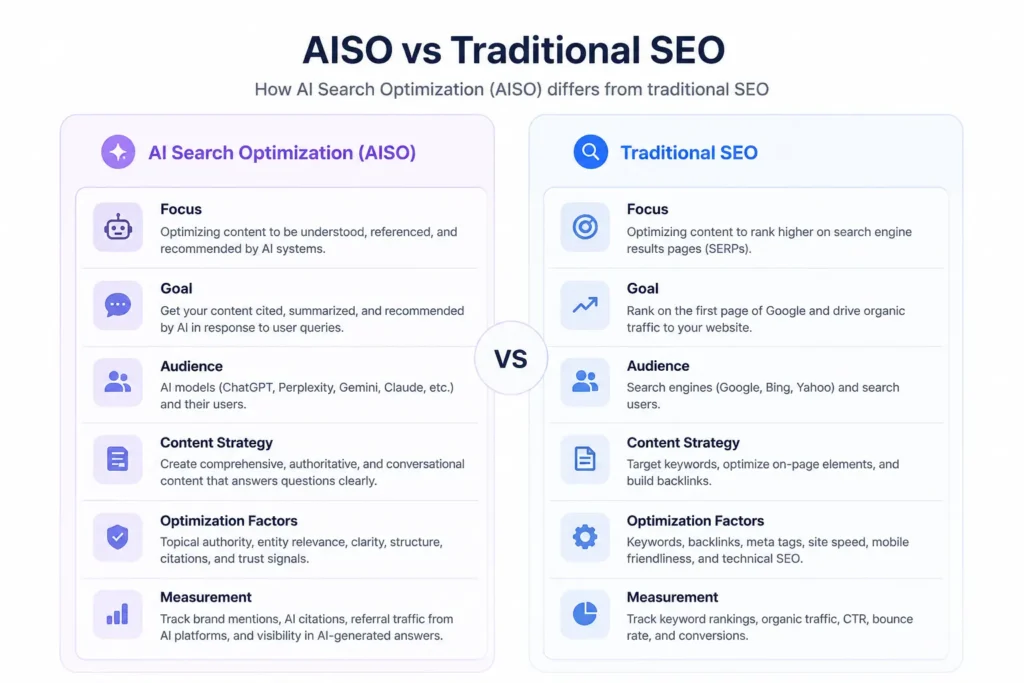
Why Traditional SEO Alone Isn't Enough Anymore
Traditional SEO still matters, but search behavior has changed. People are no longer typing short keyword fragments they’re asking full questions, such as:
- Which marketing agency is best for local businesses?
- What are the top SEO strategies in 2026?
- How can I generate more leads online?
AI systems scan multiple sources and generate one summarized answer. If your website isn’t structured for AI interpretation, your business simply won’t be part of that answer no matter how good your services are.
Key AISO Strategies for 2026
1. Create Expert-Level Content
AI systems prioritize content that demonstrates real expertise, not recycled information. Focus on:
- Industry insights and original commentary
- Case studies from real client results
- Original research and data
- Detailed, practical guides
The more genuine expertise your content shows, the more likely an AI platform is to reference it as a trustworthy source.
2. Optimize for Conversational Search
People search using natural language now, not fragments. Instead of targeting a phrase like “SEO services,” target the full question behind it: “How can SEO services help my local business grow?”
Write content that answers complete questions directly and thoroughly, the way you’d explain it to a client on a call.
3. Build Topical Authority
Instead of publishing scattered, unrelated blog posts, build content clusters around one core topic so both search engines and AI systems understand your depth of expertise. For example:
Main Topic: Digital Marketing Supporting Articles:
- Local SEO strategies
- Google Business Profile optimization
- AI Search Optimization
- PPC advertising trends
- Social media marketing for small businesses
This kind of clustering is exactly what we build into every digital marketing strategy at SoftRawe — one central authority topic, backed by supporting content that reinforces it.
4. Use Structured Data
Schema markup helps AI tools understand what your pages actually contain: services, reviews, FAQs, business details, and articles. Structured data significantly improves your odds of being featured in an AI-generated answer, since it removes the guesswork for the AI system reading your page.
5. Publish Original Research
One of the strongest trust signals in 2026 is original data something no competitor can copy. This includes marketing surveys, industry reports, local business studies, and performance benchmarks. Generic, reworded articles rarely earn a spot in AI-generated responses; unique insights do.
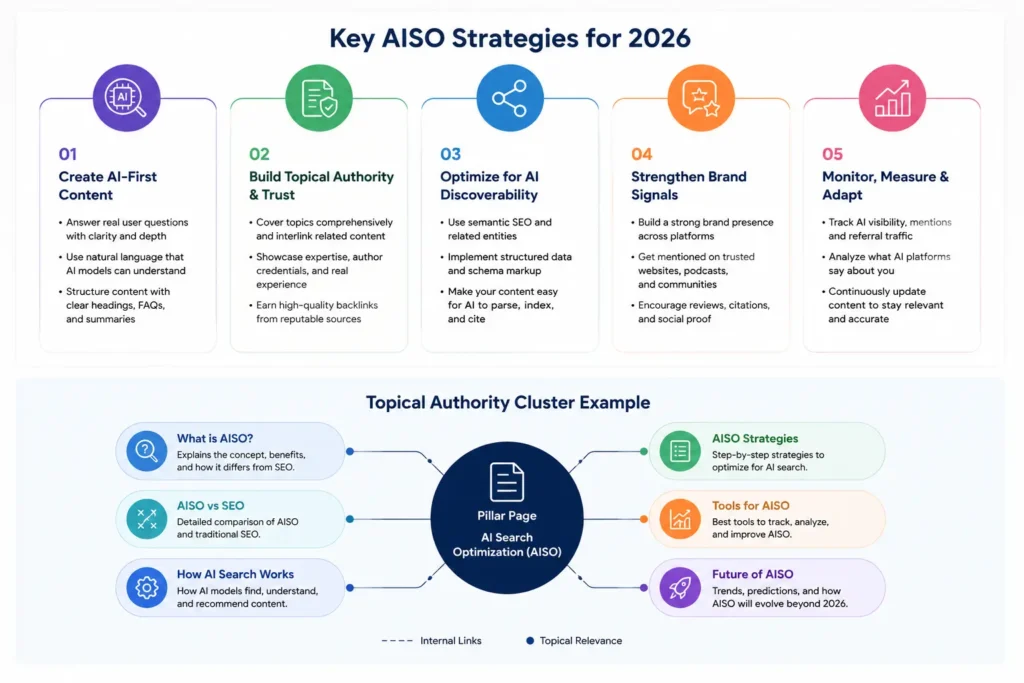
How Digital Marketing Agencies Can Benefit from AISO
Businesses researching marketing services increasingly rely on AI-generated recommendations rather than scrolling through search results. Agencies that implement AISO strategies early can:
- Increase brand visibility across both traditional and AI-driven search
- Generate more qualified leads
- Strengthen topical authority and trust
- Outpace competitors still relying on outdated SEO tactics alone
This is also why website speed and technical SEO still matter under AISO — a slow or poorly structured site is harder for AI crawlers to interpret, no matter how good the content is.
Common Mistakes Businesses Make with AISO
Publishing generic content. Thousands of sites publish nearly identical information. AI systems favor unique perspectives and first-hand expertise over recycled content.
Ignoring user intent. Solve a real business problem in your content instead of stuffing in keywords for their own sake.
Not updating content. Stale content underperforms in both traditional rankings and AI-generated answers. Fresh, current information is prioritized.
Over-relying on automation. AI-generated content without human review or original expertise often lacks the depth and originality that AI search systems are specifically designed to filter for.If your website is already struggling with visibility, it’s worth checking whether some of these deeper website and content issues are holding you back before adding AISO on top.
The Future of Search: 2026 and Beyond
The future belongs to businesses that combine traditional SEO with AI Search Optimization. Long-term success depends on:
- Expertise
- Authority
- Trustworthiness
- User-focused content
- Technical optimization
Companies that adapt now will be better positioned to win customers through both classic search engines and AI-powered platforms instead of playing catch-up later.
Conclusion
AI Search Optimization is quickly becoming a core part of any serious digital marketing strategy. SEO isn’t going away, but your content now also needs to be understandable, trustworthy, and valuable enough for AI systems to recommend you directly.
Businesses that invest in AISO today will build a real competitive advantage better visibility, more qualified leads, and a stronger position in a search landscape that’s shifting fast.
Whether you’re a small business or an established enterprise, the time to prepare for AI-driven search is now. If you’d like a hand building an AISO-ready content strategy, get in touch with our team it’s exactly the kind of work we do every day
HELLO! WE'RE LISTENING
Let's talk about your project your idea your vision
Services
- Social Media Marketing
- Digital Consultancy
- Email Marketing
- Link Generation
- Online Presence Analysis
Company
- Our Team
- About Us
- Contact Us
Support
- Help Center
- Get Live Support
- view documentation
Copyright © 2026softRawe
- Term of use
- Privacy Policy